
I started working in veterinary medicine in 2012. You would think, after all those years, that I would have known better. I didn’t. That is probably one of the hardest things I’ve had to admit to myself.
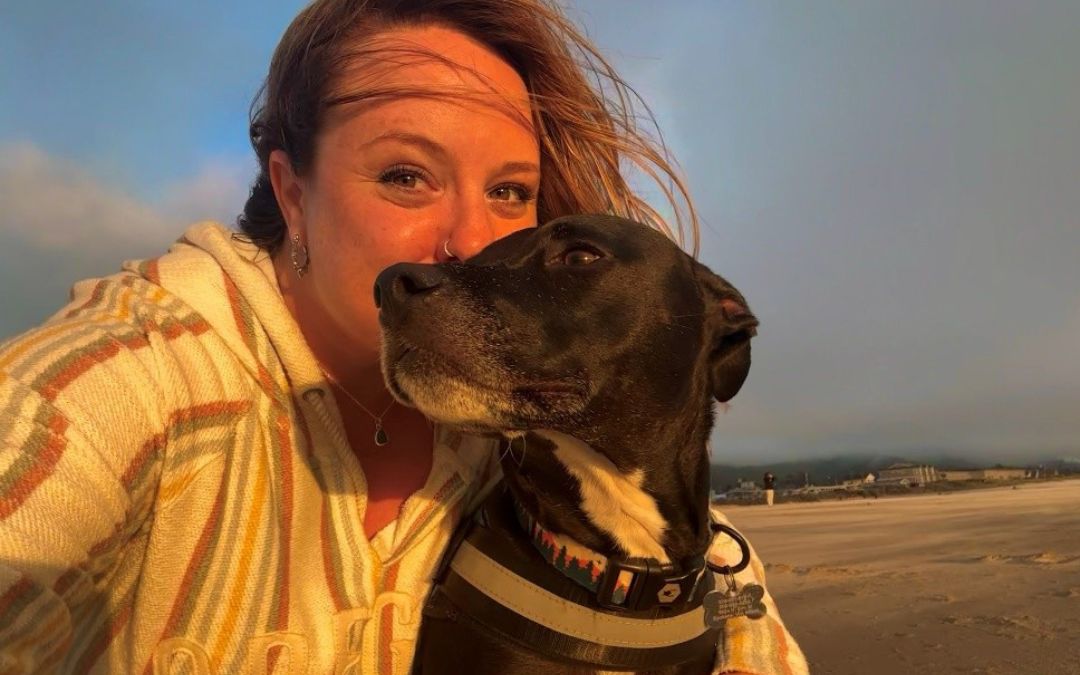
Bowser came into our lives in 2021. He was 16 weeks old, the last of his litter, a black and white pit bull mix, who has spent longer in foster care than the other puppies. I knew why he had been there so long. But I also knew something else, we were going to give this dog a home. A really good one. What I didn’t know was how much I still had to learn about helping him feel safe.
Bowser never really liked having his feet touched. At the time, nail trims were something we needed to get done, so we did what I had seen done countless times before. We put a muzzle on him. Three people held him down. And we trimmed his nails while he tried to flail.
He wasn’t being bad. He wasn’t being difficult. He wasn’t trying to make our lives harder. He was scared. I know that now. Back then, I thought we were doing what we needed to do.
Today, getting Bowser’s nails trimmed is an entirely different story. If we’re lucky, it happens once a year under sedation. Then we keep them maintained by using a scratch board at home and a little running at the tennis courts. I wish I could go back with the knowledge I have now.
I didn’t understand the damage those experiences could cause. I didn’t understand how quickly an animal can learn that being touched means something frightening is about to happen. I didn’t understand that getting the job done isn’t always the same thing as successfully caring for the animal in front of you. I didn’t fully understand any of that until 2023.
After more then a decade working in veterinary medicine, I was still learning how to look at animals differently. Then I started working at Latah Creek Animal Hospital. It changed the way I saw my own dog.
I know now that behavior is communication. What I once saw as stubbornness, resistance or simply not liking something, I now understand can be an animal’s way of telling us, I’m scared. I’m overwhelmed. I don’t feel safe.
The paw being pulled away. The lip lick. The turning of the head. The attempt to get away. The growl. Even freezing completely still. These aren’t animals trying to make our jobs harder. They’re communicating with us the only way they know how.
I wish I had understood that with Bowser. I wish I had recognized that when he wouldn’t let us touch his feet, he wasn’t being difficult. He was telling us he was uncomfortable. When we had to muzzle him and have three people hold him down to trim his nails, he wasn’t misbehaving. He was afraid. It still breaks my heart; I allowed it and participated. I know now.
When an animal experiences that kind of fear, the stress doesn’t end when the appointment does. Their body has a stress response just like our does. Cortisol and other stress hormones are released and it can take time for the nervous system to settle back down after a frightening experience.
That means a veterinary visit isn’t always just the 40 minutes we’re in the exam room. For some animals the experience starts when the carrier or leash come out. It continues in the car, the parking lot, the lobby, during the examination and sometime long after they get home. The more frightening experience they have the more they can begin to anticipate the next one.
I wish I had understood the goal shouldn’t have been simply to get Bowser’s nails trimmed. The goal should have been to help him feel safe enough that we could trim his nails.
Those are two very different things. We just have to be willing to listen.