
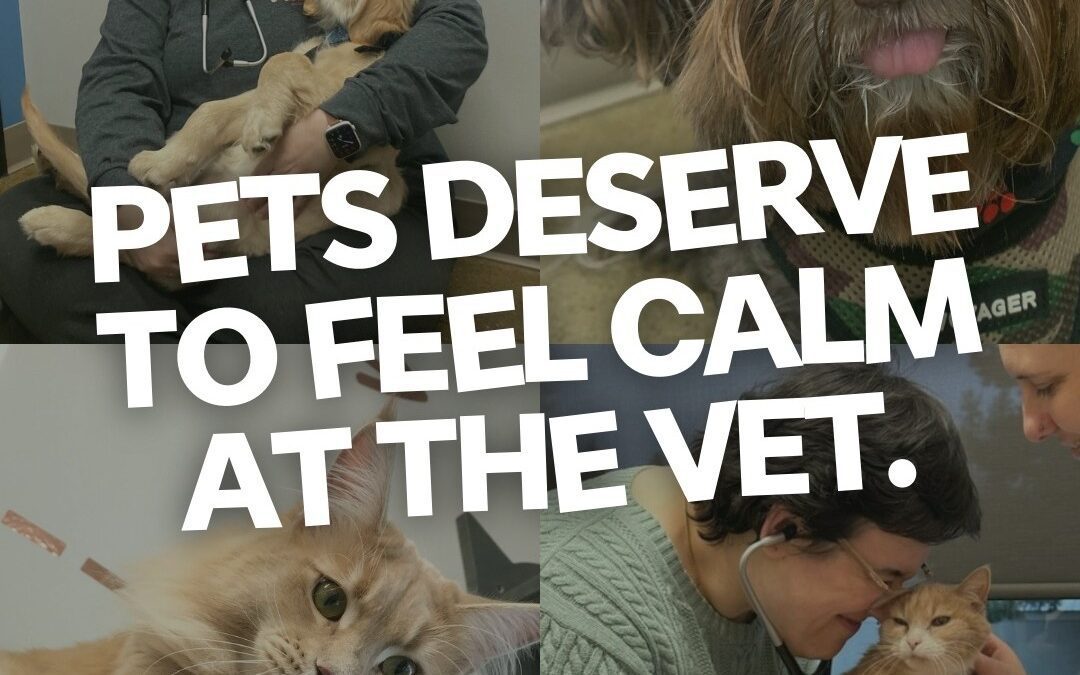
A pet who is calm is safer and happier than a pet who is terrified – even if they are sleepy.
The number one concern we get about the calming medications we use are “will he be too sleepy?” Depending on your pet’s medication protocol and how their nervous system reacts, they may be sleepy or sedate, especially after their appointment. But the alternative when tey are unregulated can mean they are pacing, panting, fighting, trying to escape, vocalizing, or freezing. That is a dysregulated nervous system. Their body is flooded with stress hormones like cortisol and adrenaline.
If your pet gets medications before a vet visit, a nail trim, a car ride, or any situation that spikes their stress, they may become sleepier and more sedate when they get home and relax. If they spend the rest of the day sleeping, and aren’t really interested in their normal activities? That is totally okay! Their nervous system is calm and recovering.
Think about it: if your friend, spouse, or child went to the doctor for a stressful procedure, then came home and slept, what would you say? Would you feel worried that they didn’t want to go for a hike, or if they spent the afternoon sleeping would you say “oh good, I’m glad they can get the rest they need!” Our pets deserve the same.
Seeing our pets sleepy shouldn’t feel scary for us. Because being in panic mode has much worse long-term effects than being sleepy. Sleepy means the nervous system is not in panic mode. Sleepy means the body is restoring and recovering. Sleepy means the experiences are not being stored in the brain as trauma. Sleepy means the stress hormones are leaving the body faster, and not leading to delays in healing.
So if your pet comes home after meds and takes a nap? Good. It means their nervous system is recovering.